Beyond Earth · Astrophotography
A Celestron NexStar 5SE, a Nikon D750, and a lot of patience. Things I've pulled out of the sky from backyards across NSW.
Galaxies
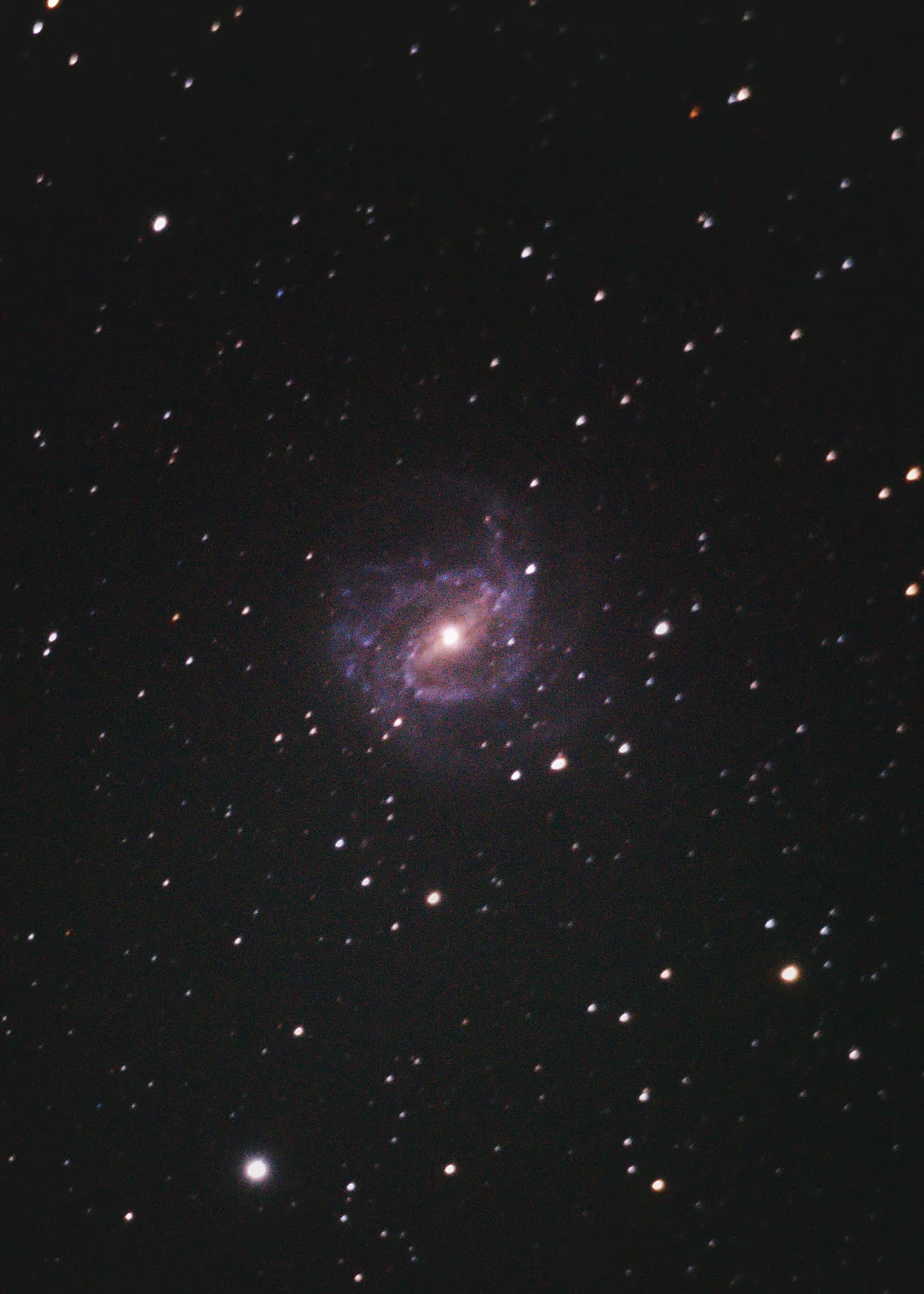
Barred Spiral Galaxy
M83 · NGC 5236
One of the closest and brightest barred spiral galaxies visible from Earth. The spiral arms and bright core are real, this light left its source 15 million years before humans existed.
Capture Details
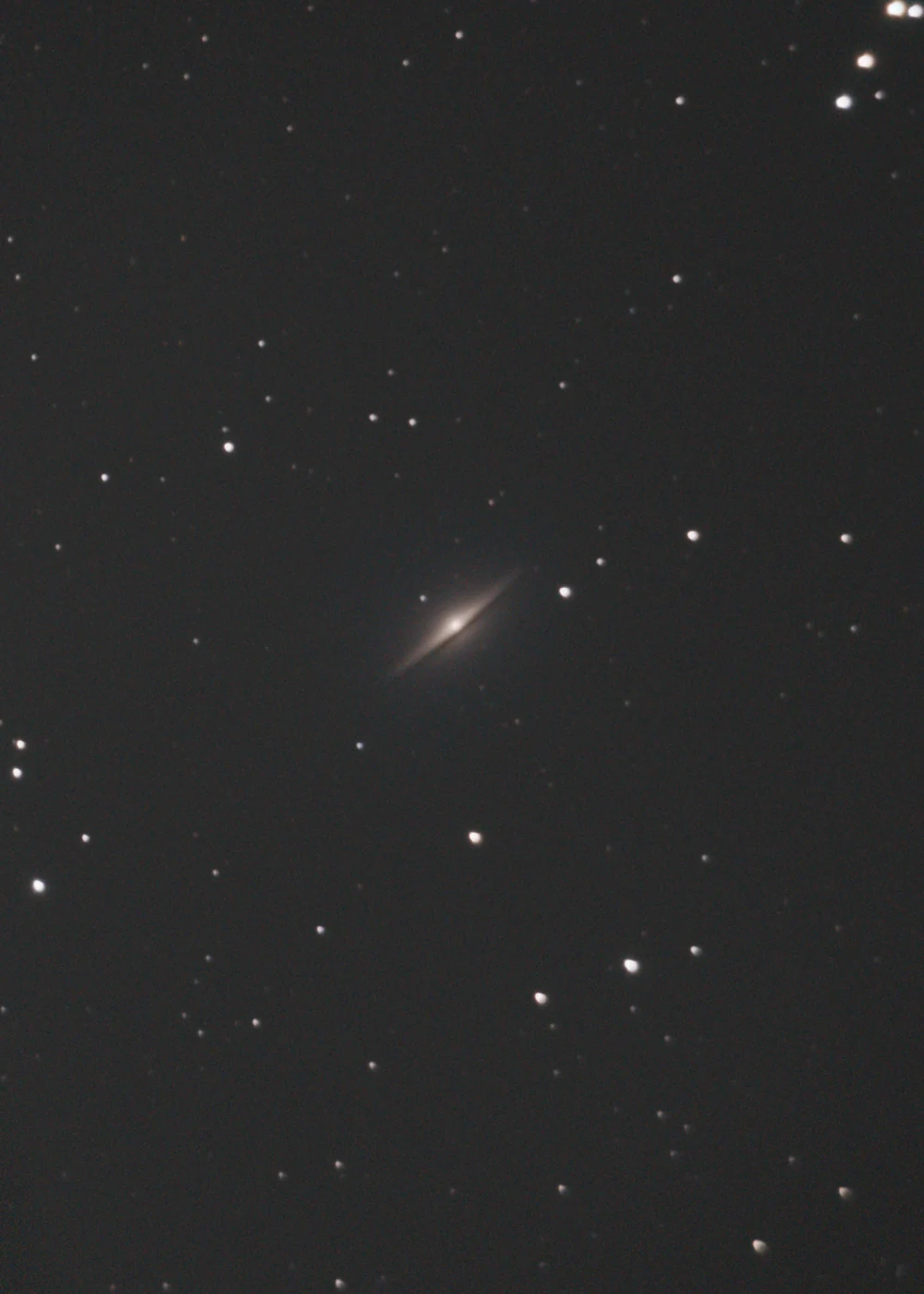
Unbarred Spiral Galaxy
M104 · NGC 4594
The dark dust lane across the equator makes it one of the most recognisable galaxies in the sky. At 28 million light-years, every photon here has been travelling since before the first primates walked the Earth.
Capture Details
Nebulae
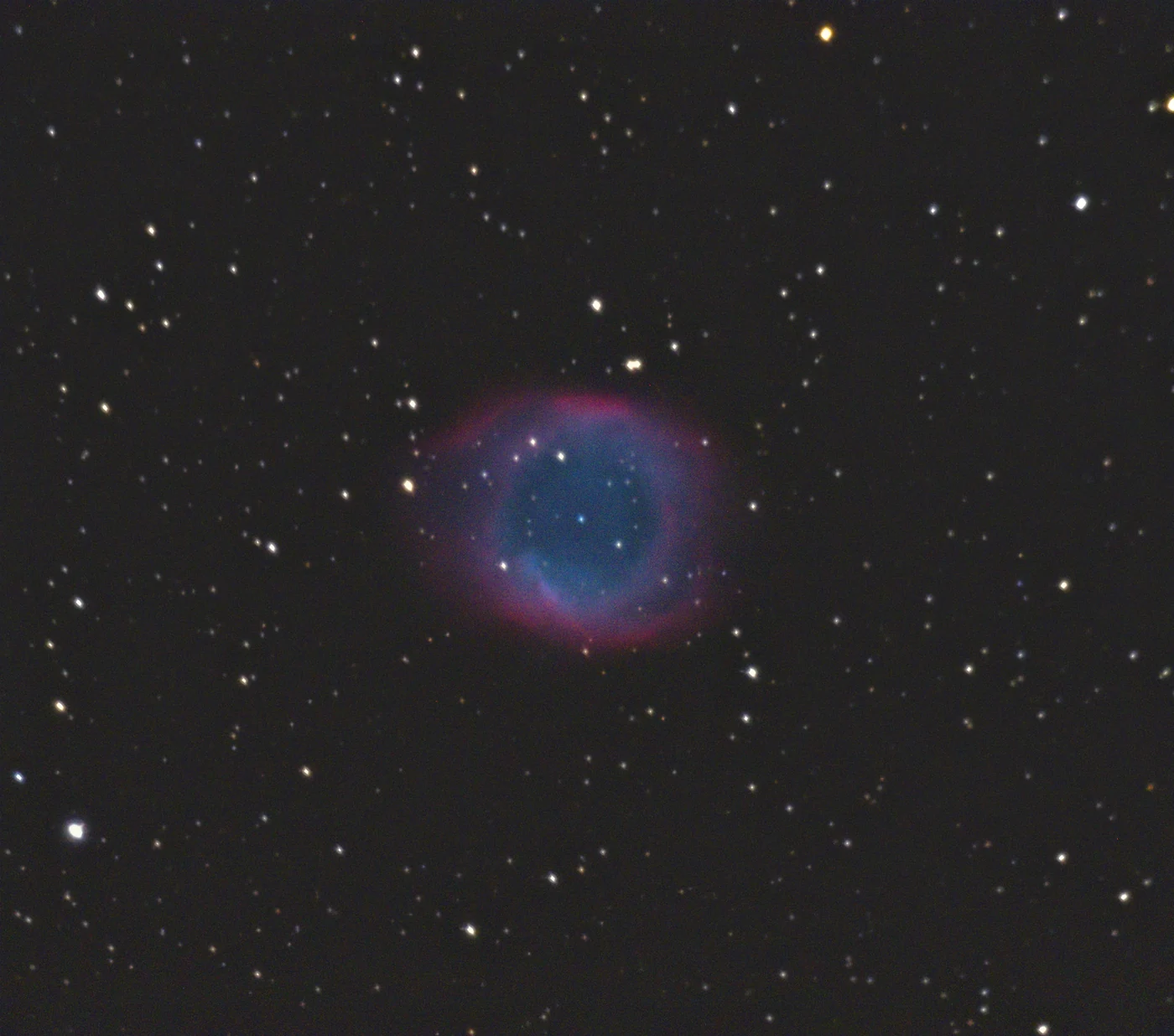
Planetary Nebula
NGC 7293 · "Eye of God"
A dying star's last breath. The teal and crimson channels are ionised oxygen and hydrogen emitting light at specific wavelengths, brought out in post-processing. This is what our Sun will look like in about 5 billion years.
Capture Details
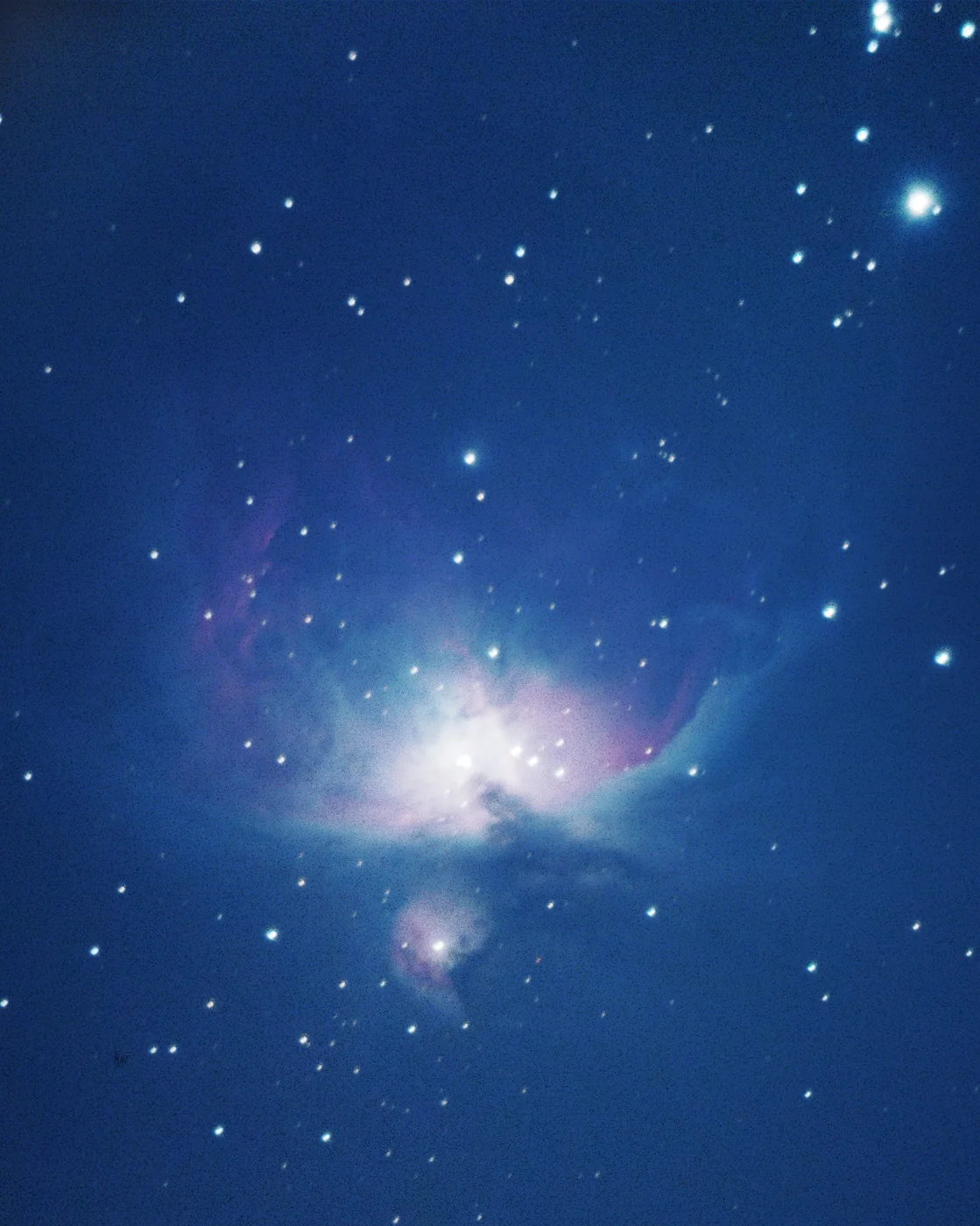
Emission Nebula · Star Nursery
M42 · NGC 1976
The nearest stellar nursery to Earth, visible to the naked eye in Orion's sword on a clear night. Not the sharpest image in this collection, but it's in here because every astrophotographer has to shoot Orion. New solar systems are forming inside it right now.
Capture Details
The light in these photos left its source millions of years before humans picked up a camera. That still gets me every time.
Long Exposure
Wide field astrophotography, where the camera captures the sky as a landscape rather than zooming into one object. No telescope needed, just a fast lens, a dark sky, and time.
Chaffey Dam · Tamworth NSW
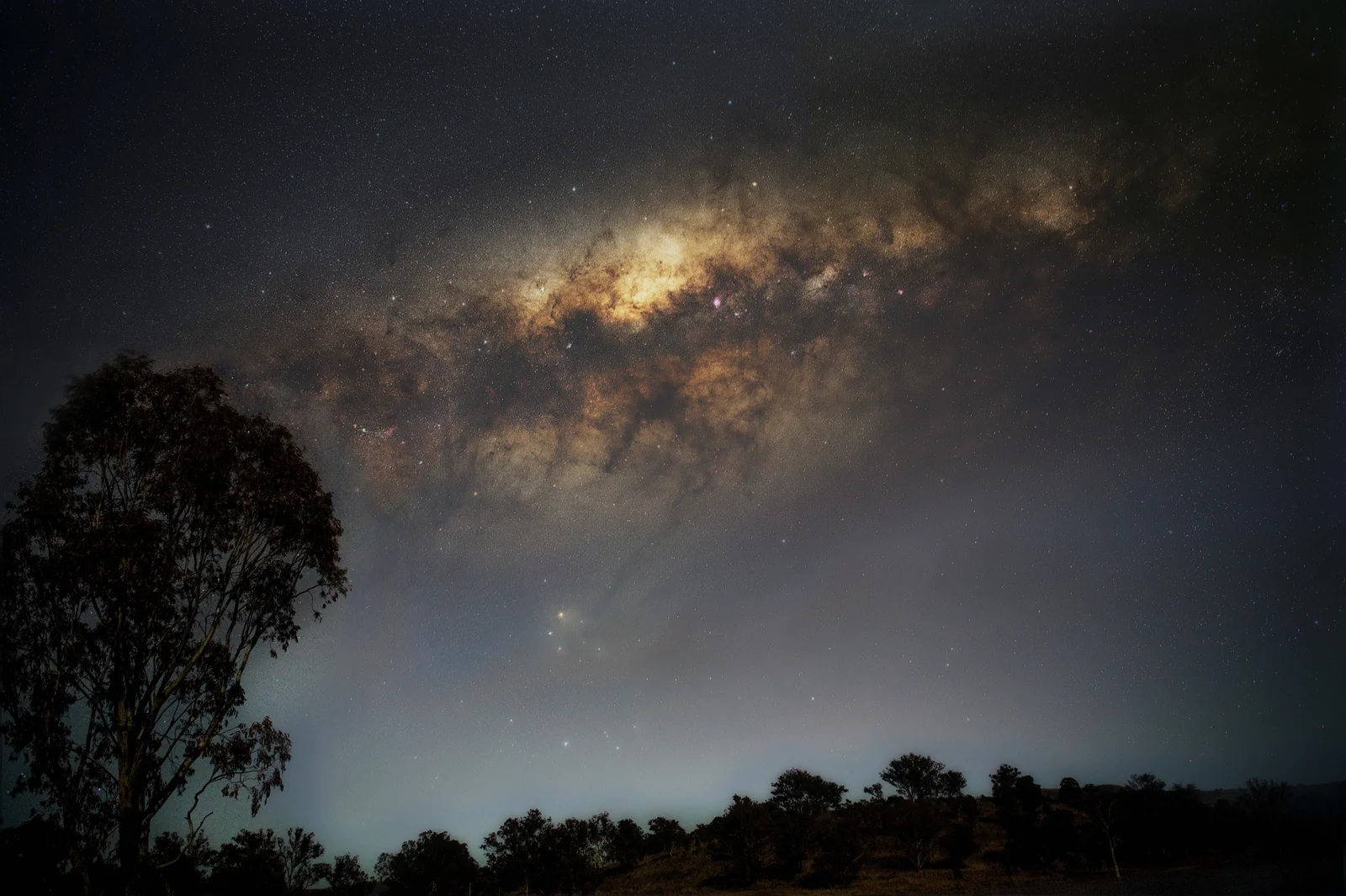
Milky Way Core
Chaffey Dam · Tamworth NSW · Nikon D750 · Long exposure · The silhouetted eucalyptus and low fog make this one of my favourite frames.
Byron Bay NSW
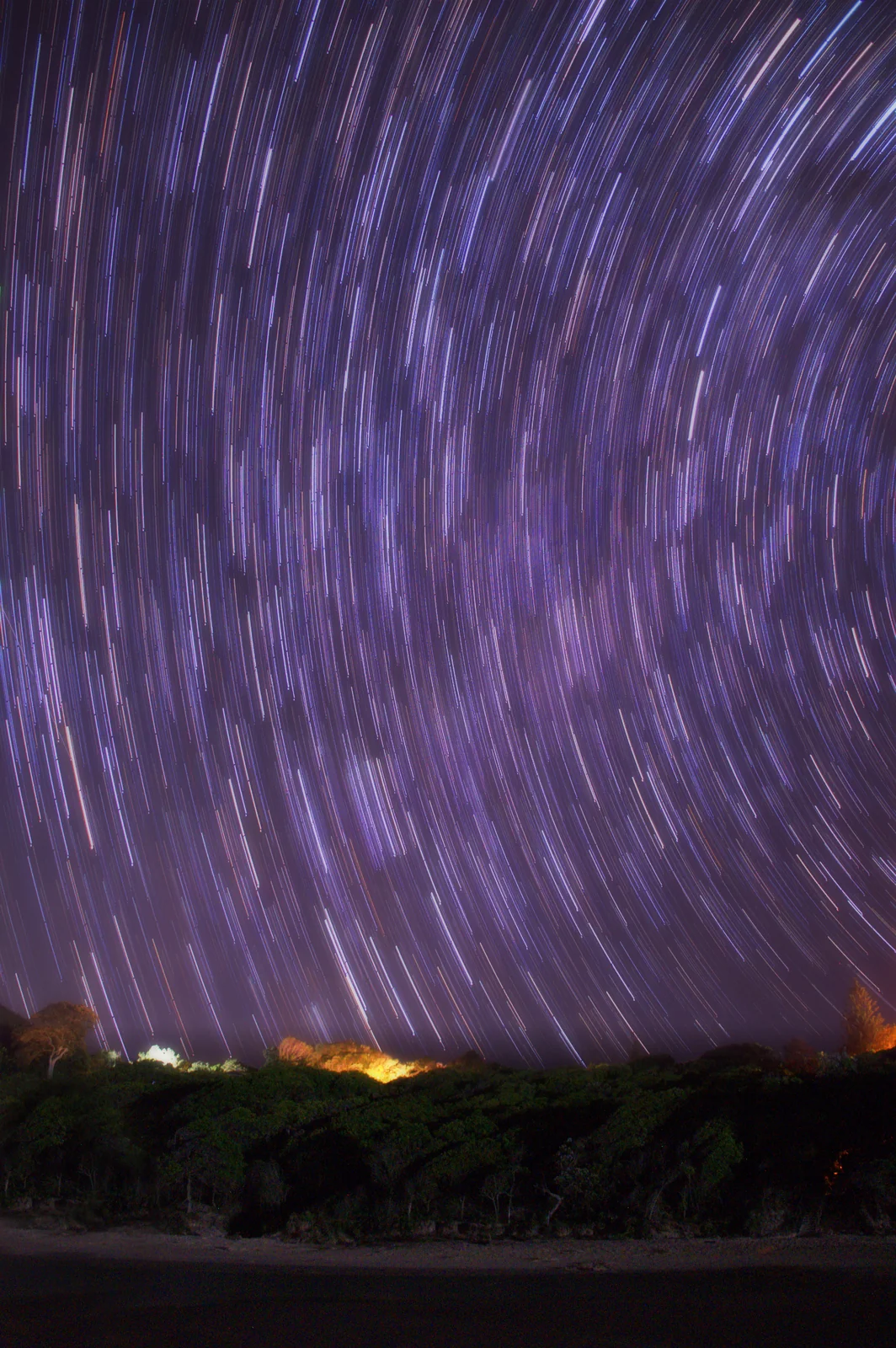
Star Trails
Byron Bay NSW · Nikon D750 · Dozens of frames stacked with lighten blend mode · The circular arcs show Earth's rotation axis · Lights below are Byron Bay township
Star trails work by deliberately not tracking. You shoot dozens or hundreds of individual frames and stack them with a "lighten" blend mode, so each star's path accumulates into a streak. The circular arc pattern is caused by the Earth's rotation. The centre point of all the arcs is the South Celestial Pole.
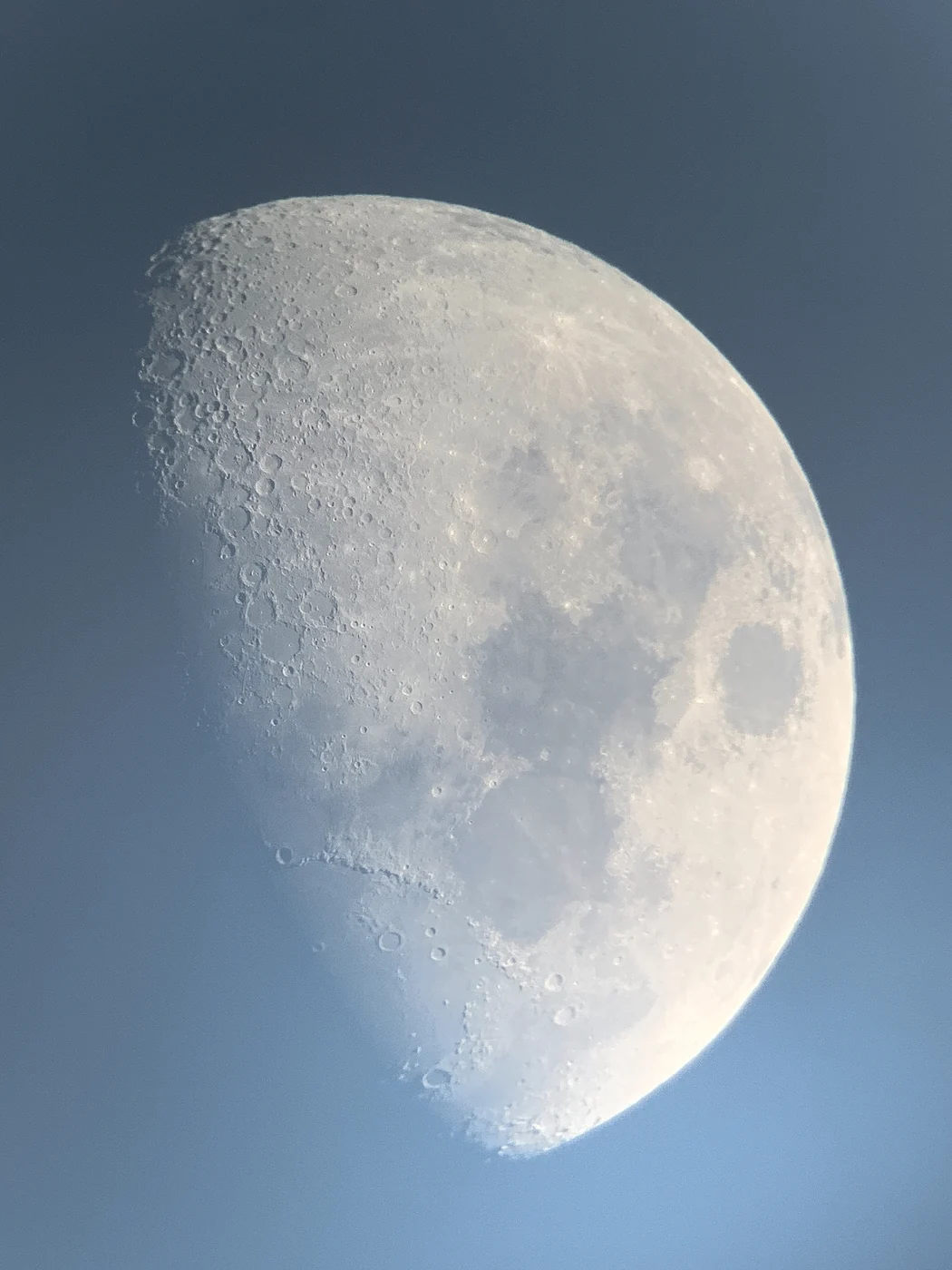
Earth's Moon
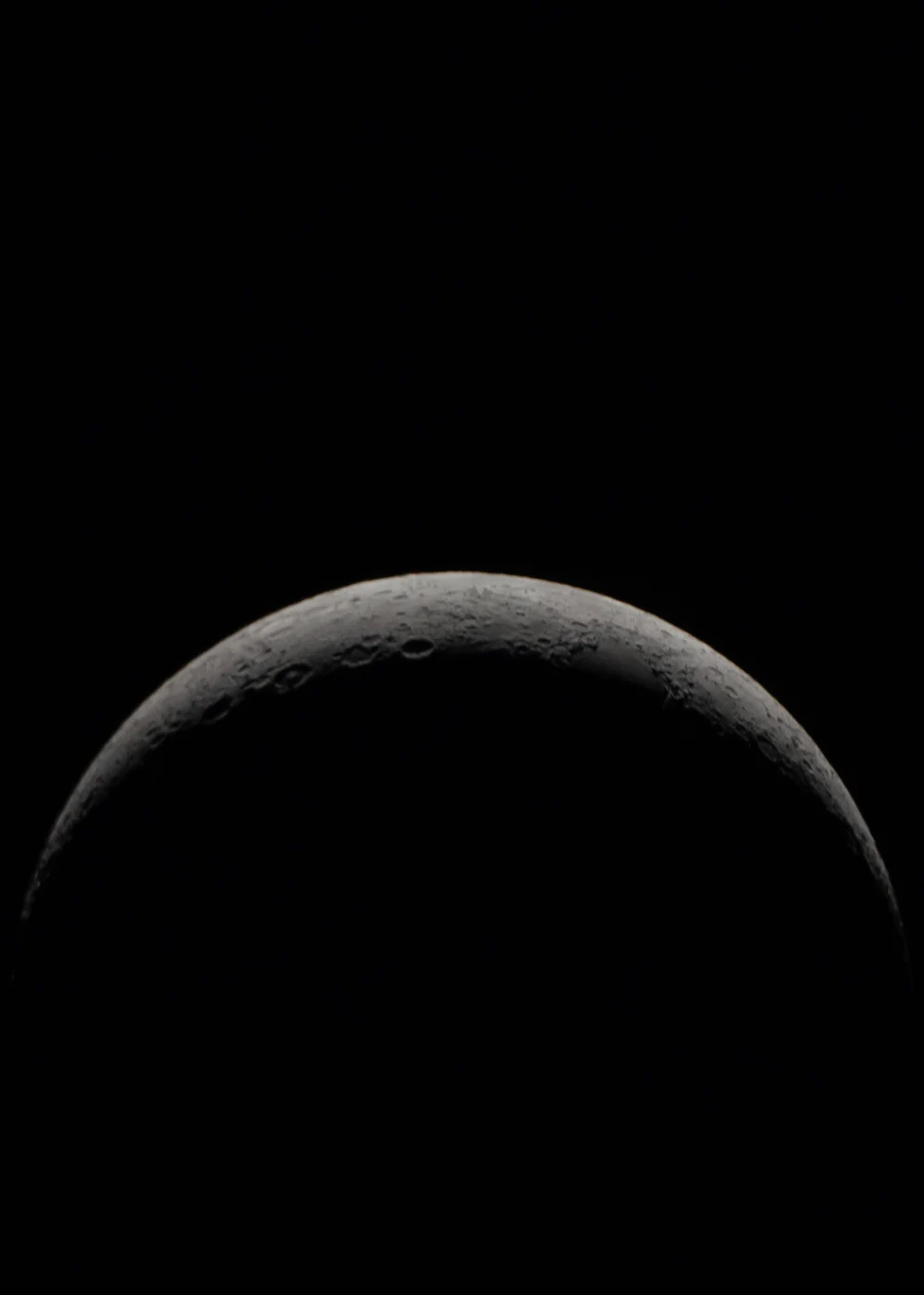
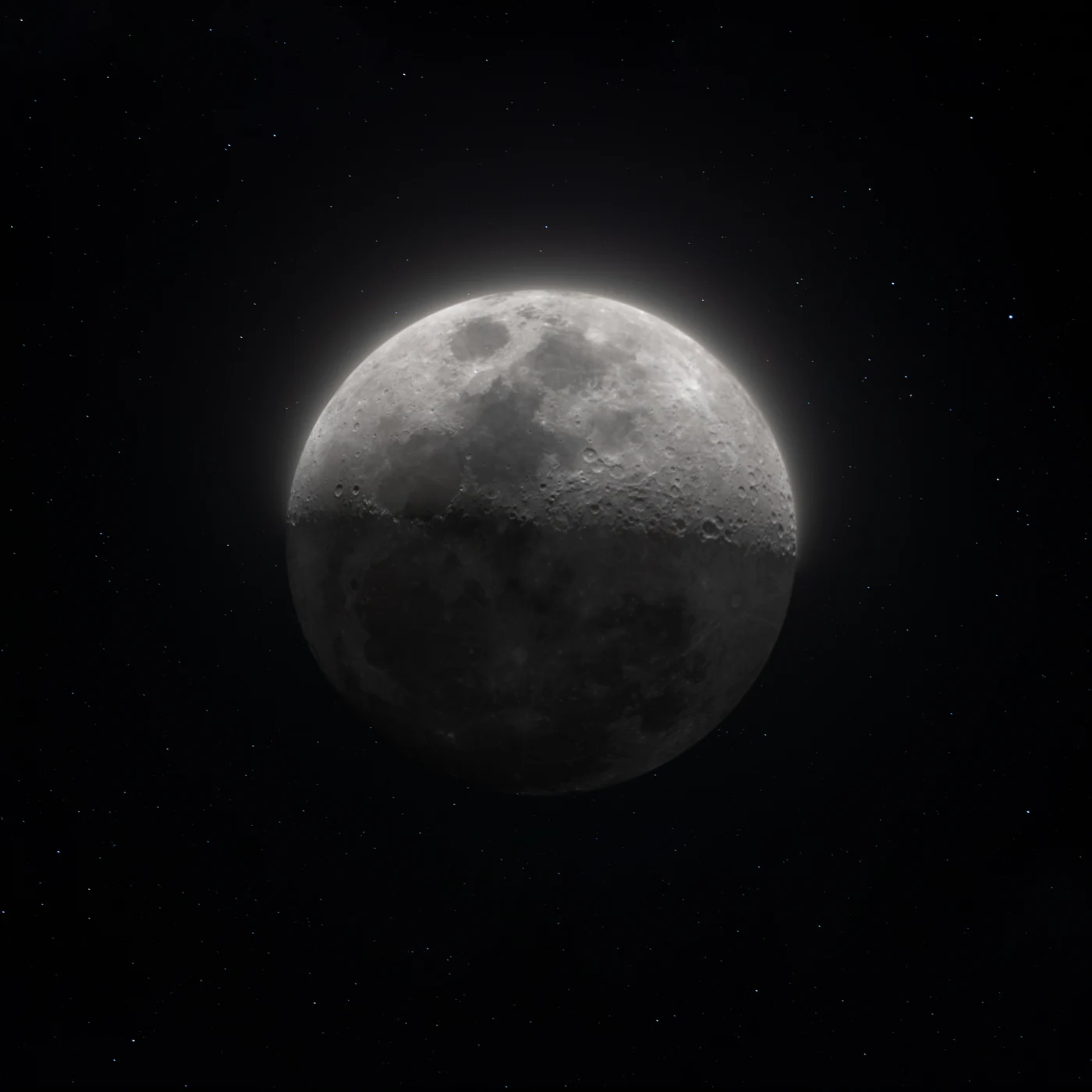
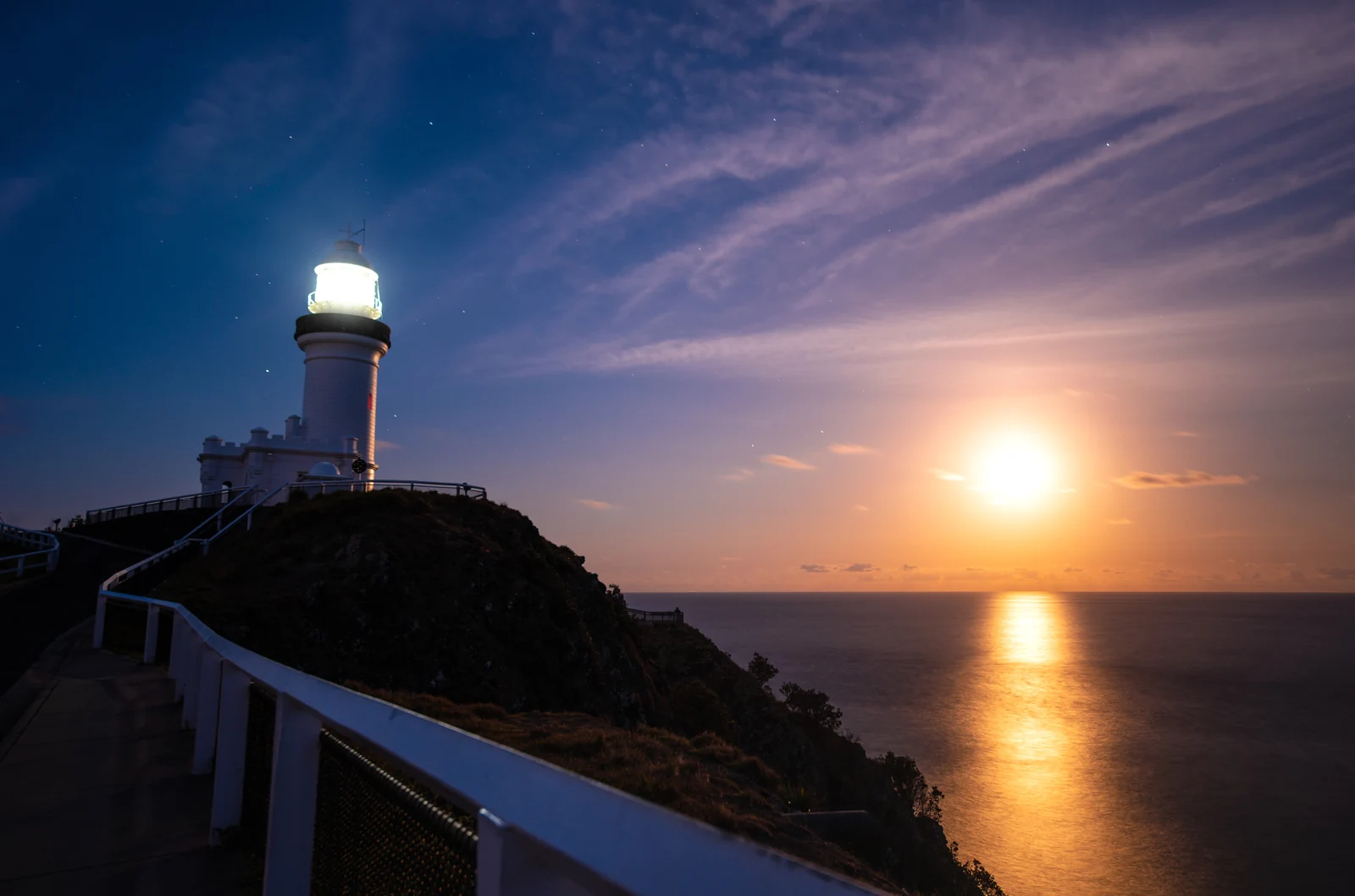
Crescent moons, composite images, a daytime shot through the telescope on iPhone, and a moonrise over Byron Bay that looks like a sunrise, but isn't.
The Byron Bay shot looks like a sunrise, it's the Moon rising over the Pacific Ocean. Stars are still visible in the upper sky.
The Process
You can't just point a camera at a galaxy and take a photo. What you see above is the result of hundreds of individual exposures combined in post-processing to pull signal out of noise. Here's how it works.
The Earth rotates, which means stars move during a long exposure. Without tracking you get star trails instead of pinpoints. The NexStar 5SE uses a motorised mount that rotates at exactly the Earth's speed, in the opposite direction, keeping the target locked for minutes at a time.
These are your actual exposures of the target. For deep sky objects I shoot hundreds of these, typically 30–120 seconds each, over multiple sessions. Each frame captures a tiny amount of signal buried in noise. Stacking them amplifies the signal while averaging out the random noise.
Add exact frame counts per image when readyNot photos of the sky, technical images used to correct systematic errors in your sensor and optical train. Each type removes a different kind of noise or artefact from the final stack.
Dark Frames
Lens cap on, same exposure and temperature as lights. Captures thermal noise, subtracted from each light frame.
Flat Frames
Short exposures of a uniformly lit surface. Captures vignetting and dust shadows, corrects uneven illumination across the frame.
Bias Frames
Zero-length exposures that capture baseline readout noise of the sensor. Used with darks and flats for the most accurate calibration.
Dark Flats
Same exposure as flats but with the lens cap on. Calibrates the calibration, removes the bias signal embedded in the flat frames themselves.
All frames go through stacking software, Siril or DeepSkyStacker, which aligns them, applies calibrations, and combines them into a master image. The galaxy is usually invisible in any single raw frame. Stacking 100+ frames is what pulls it out of the noise.
Add specific software per imageThe stacked master image is linear, almost nothing visible yet. Post-processing involves stretching the histogram to reveal faint detail, colour calibration, noise reduction, and sharpening. This is where the image goes from grey smear to the final result.
Add specific processing notes per imageWhen the hobby became the job
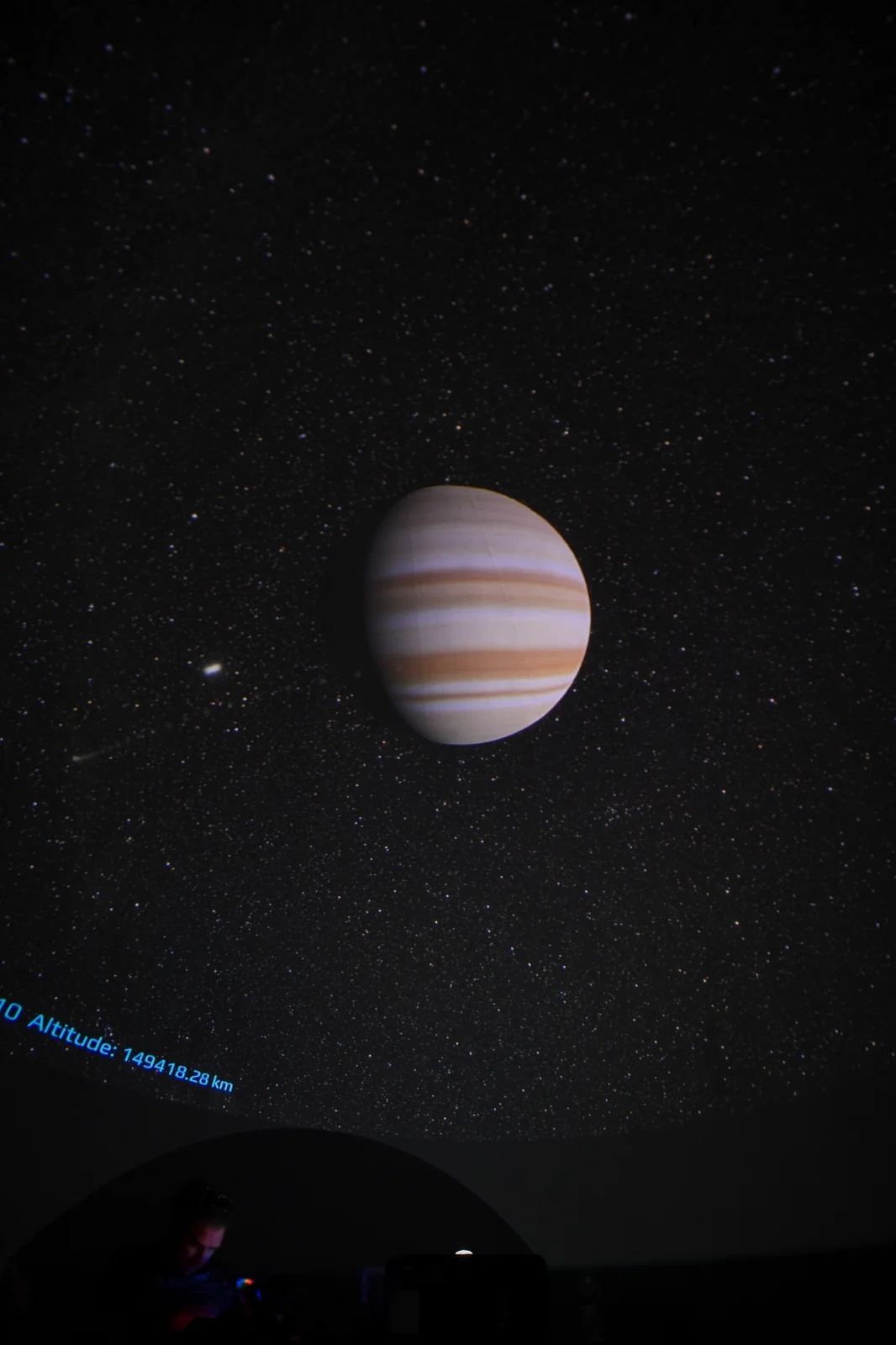
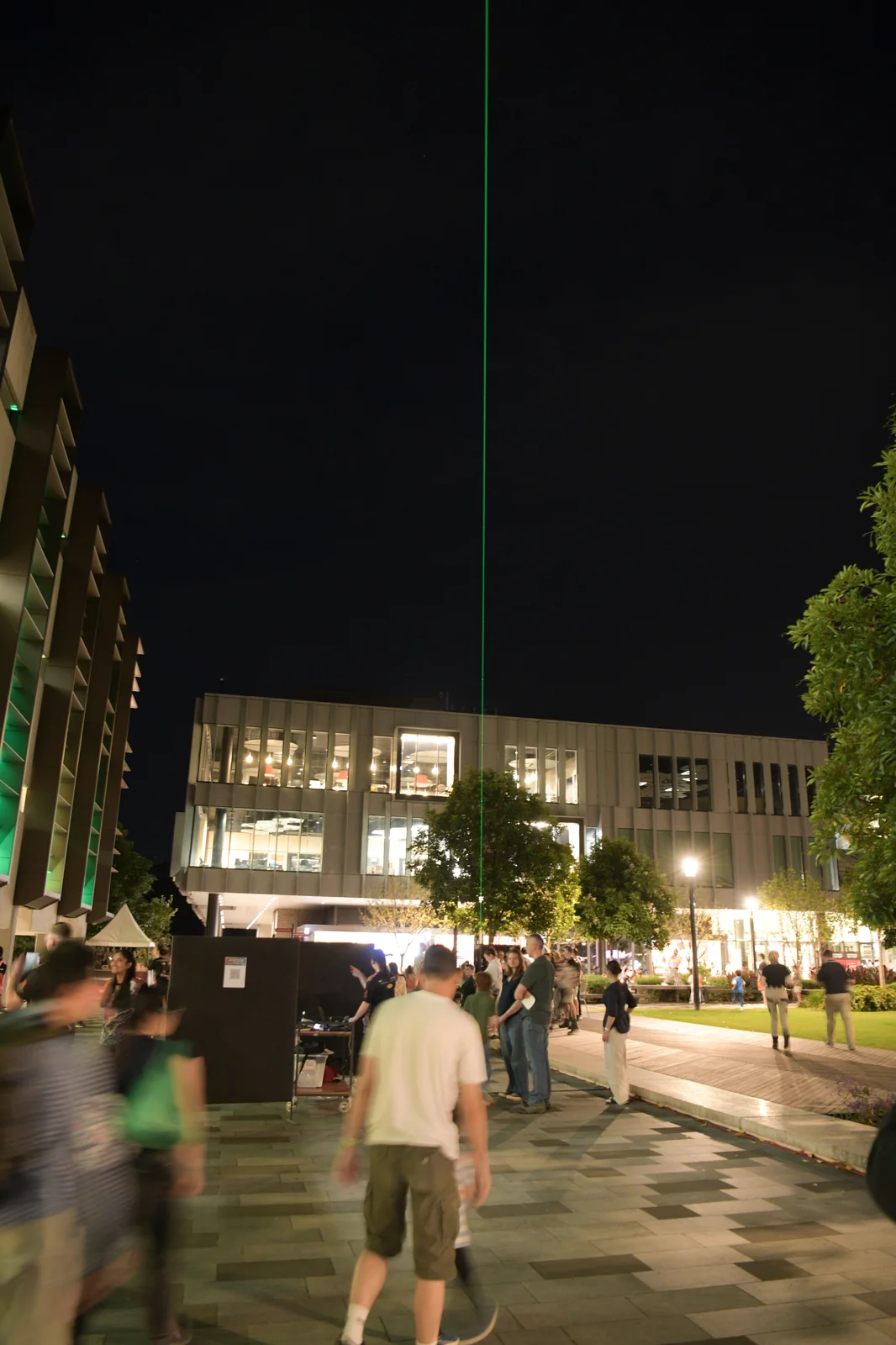
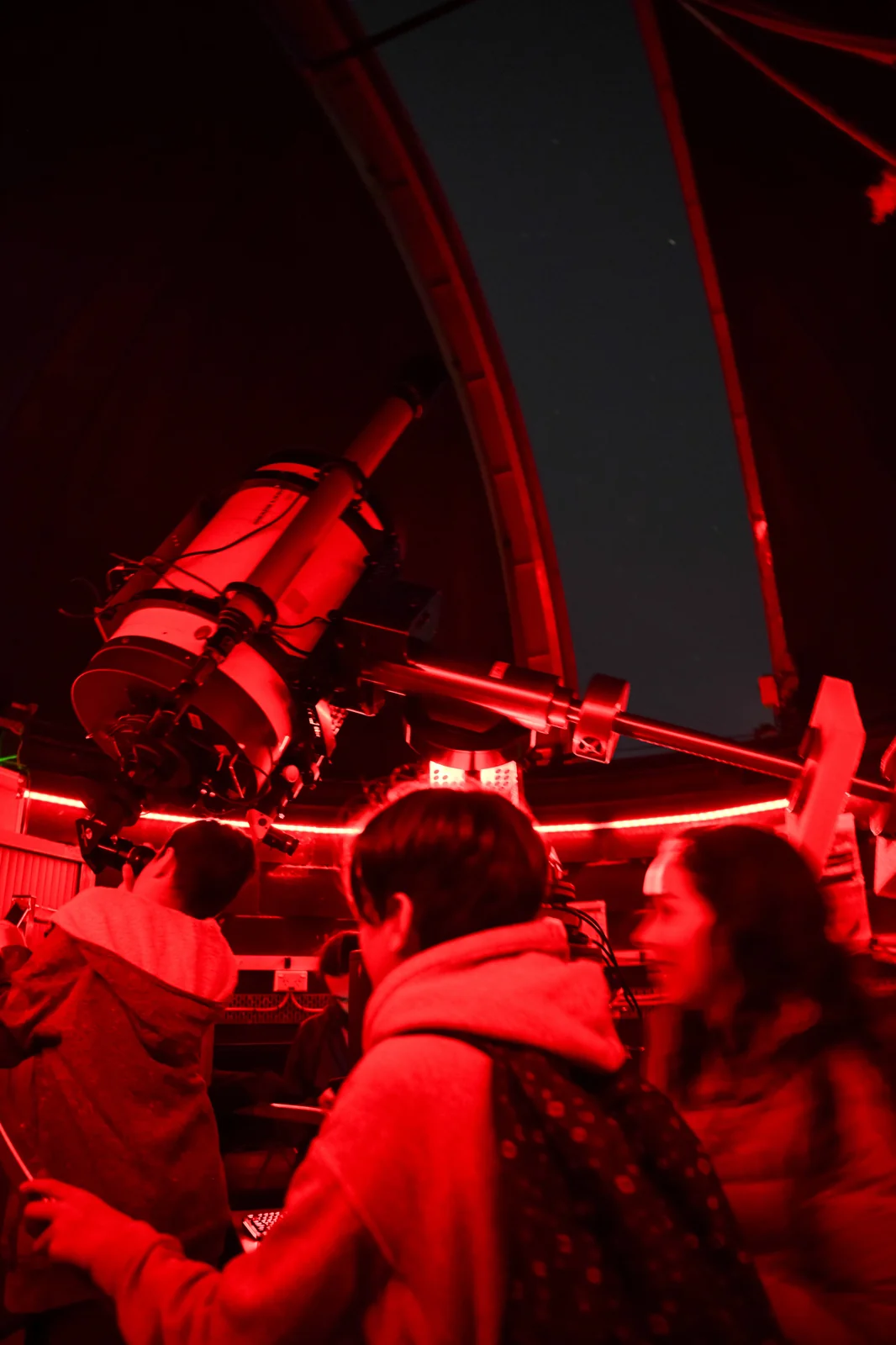
At Macquarie I got to set up and photograph the university's astronomy open night — inflatable planetarium, telescope dome access, researcher interviews, a green laser pointing at the sky. The kid who was obsessed with space ended up getting paid to be at a space event with a camera.
See the full MQU work ↗